
Steps to Self Attest Your Documents
Gone are the days when you had to stand in long queues outside a government office or hunt down a busy official just to get your photocopies stamped. Over the past decade, administrative processes have been drastically simplified to put more trust in the citizens. Today, if you are wondering how to self attest a document, you are joining millions of people who benefit from this streamlined, time-saving procedure every day.
Self-attestation is a massive relief, saving you time, money, and unnecessary bureaucratic hurdles. Whether you are applying for a new job, trying to open a bank account, or dealing with government paperwork, knowing the correct way to self-certify your paperwork is an essential life skill.
In this comprehensive guide, we will walk you through exactly how to self attest a document, what the specific terminology means, and how to avoid common pitfalls that could get your application rejected.

Understanding the Basics of Document Attestation
Before diving into the steps, it is important to grasp the terminology often used in official forms and applications.
What is the Meaning of Self Attested Copy?
The meaning of self attested copy is quite straightforward. It refers to a photocopy of an original document that you, the document holder, have personally signed. By signing it, you are officially taking responsibility and declaring that the photocopy is a true, unaltered replica of your original document.
Difference Between Attestation and Self Attestation
To truly understand the concept, you must know the difference between attestation and self attestation.
- Traditional Attestation: This requires a credible third party—such as a gazetted officer, a notary public, or a school principal—to review your original document, compare it to the photocopy, and stamp the copy with their official seal and signature to verify its authenticity.
- Self Attestation: This shifts the responsibility entirely to you. You verify your own documents by signing them, acting on your own honor and legal accountability.
When you read through an application form and see instructions demanding documents be submitted, the duly self attested meaning simply implies that every single photocopy you submit must bear your personal signature and the date, confirming its accuracy.
Step-by-Step Guide: How to Self Attest Your Documents
Learning how to self attest is incredibly simple, but there is a specific etiquette you should follow to ensure your paperwork is accepted without a hitch.
Here is the universally accepted self attestation format for documents:
- Make a Clear Photocopy: Start by taking a crisp, legible photocopy of your original document. Ensure that all the text, seals, and photographs on the original are clearly visible on the copy.
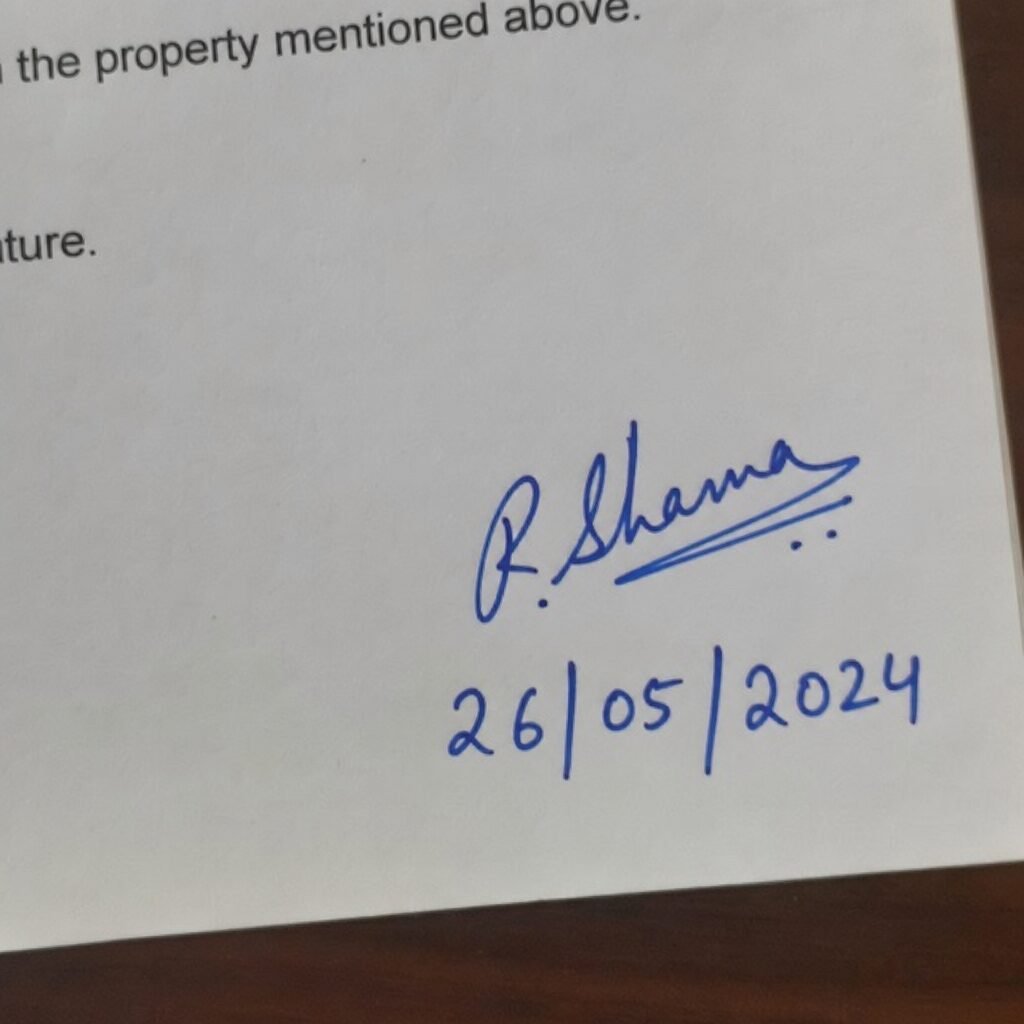
- Write the Declaration: You might be wondering how to write true copy on documents. Find a blank space on the front of the photocopy—avoid writing over any important text. Simply write the words “True Copy” or “Self-Attested” in clear handwriting.
- Place Your Signature: Knowing exactly where to sign for self attestation is crucial. Always aim for the bottom right corner of the page. If the bottom right is filled with text, find the nearest blank space at the bottom of the page. Your signature should match the one on your official IDs.
- Add the Date: Always write the current date just below your signature. This creates a timeline for your application.
By following these four simple steps, you have successfully learned how to self attest a document.
The Tricky Part: Dealing with Photographs
Document copies are one thing, but photographs often cause confusion. Many forms will ask you to provide an attested photograph along with your paperwork.
What an Attested Photo Means
Historically, an attested photo meant a gazetted officer had to stamp your passport-sized picture and sign across it. Today, most forms allow you to do this yourself. But what exactly a self attested photo means in this context can be a bit confusing. Essentially, it is your visual declaration that the photograph genuinely belongs to you and is a recent likeness.
How to Self Attest Photo
If you are staring at your application form and wondering how to self attest photo properly, follow these rules carefully:
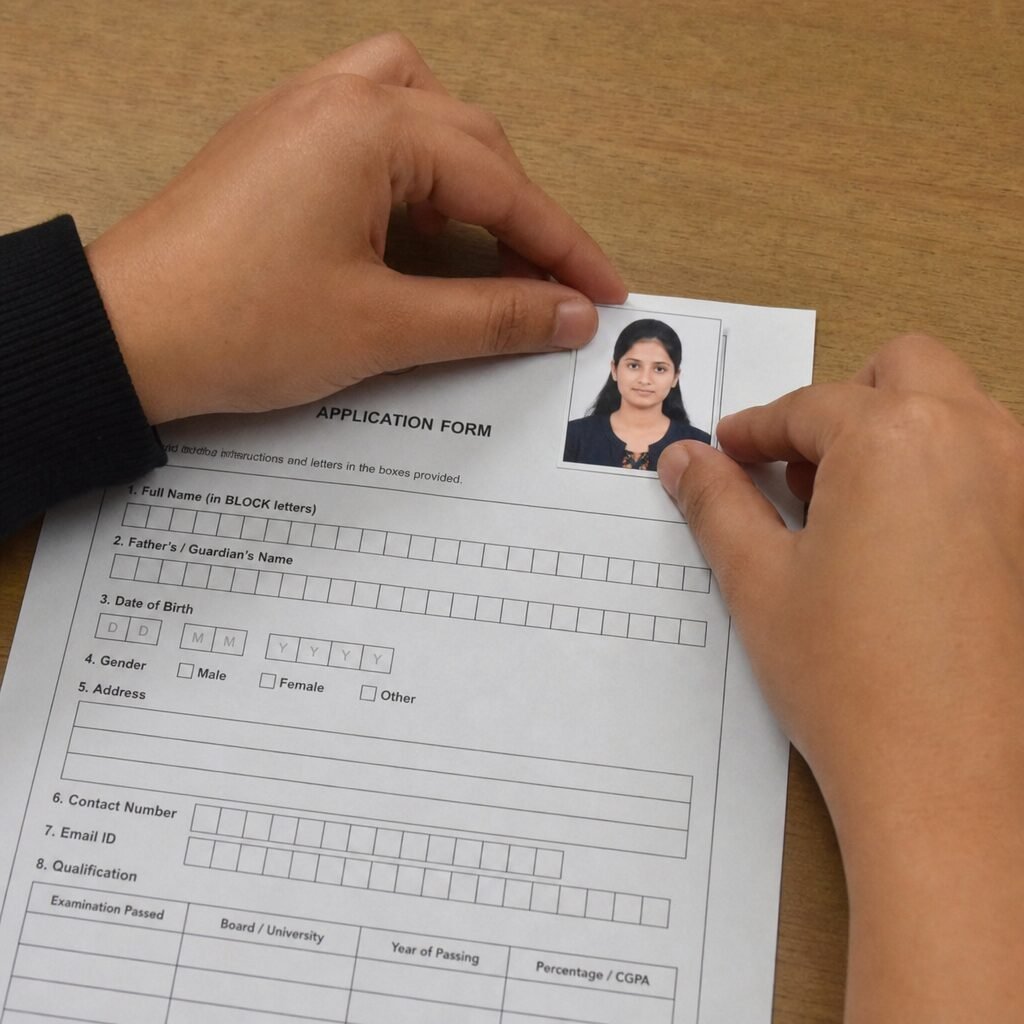
- Paste, Don’t Staple: First, glue or paste the photograph firmly into the designated box on the application form.
- The Cross-Signature: To self-attest, you need to sign across the photograph and the paper. Start your signature on the application form, continue it across the bottom portion of the photograph, and end it back on the paper.
- Keep the Face Clear: The golden rule of providing an attested photo means never letting your signature cross your face. Keep the ink strictly on your chest/shoulder area in the picture.
Common Use Cases for Self-Attested Documents
You will encounter the need for self-attestation in various stages of life. Here are a few of the most common scenarios:
1. Self Attestation for Bank Account Opening
When completing your Know Your Customer (KYC) process at a bank, you will be asked for proof of identity and proof of address (like a driver’s license or utility bill). You must provide self attestation for bank account opening by signing the photocopies of these documents. This legally binds you to the information provided to the financial institution.
2. Self Attestation for Passport Application
Getting a passport used to involve running around for official stamps. Today, self attestation for passport application is the standard norm. You simply sign the copies of your birth certificate, Aadhaar card, or other required IDs. Just remember to carry the originals with you to the Passport Seva Kendra for physical cross-verification.
3. Educational Purposes
A frequently asked question by students and recent graduates is: “Can I self attest my own degree certificate?“ The answer is a resounding yes. Whether you are applying for a private sector job, a government exam, or postgraduate admissions, you can self-attest the copies of your mark sheets and degree certificates. The institution will usually only ask to see the original documents during the final interview or admission stage.
Legal Validity: Self Attestation vs. Official Attestation
With this shift in procedure, people often wonder about the legal weight of their own signatures.
Is Self Attestation Legally Valid?
Yes, absolutely. Is self attestation legally valid? In most democratic countries, including India, the government has passed specific orders to replace affidavits and official attestations with self-declarations for standard services. By self-attesting, you are signing a legal declaration. If you are found submitting forged self-attested documents, you can face severe legal penalties under penal codes for fraud and forgery.
Self Attested vs Notary
When looking at self attested vs notary, it comes down to the gravity of the document. Self-attestation is used for basic identity and address verification. A notary public, however, is required for legally binding agreements, sworn affidavits, power of attorney documents, and property deeds. A notary acts as a legal witness to your signature, which a self-attestation cannot provide.
Are There Documents Requiring Gazetted Officer Attestation?
Despite the push for self-certification, there are still a few documents requiring gazetted officer attestation. These usually include sensitive processes such as applications for citizenship, certain highly regulated government pensions, state police verifications, and character certificates. Always read the application guidelines carefully.
Validity Period of Self Attested Documents
Another common query is regarding the validity period of self attested documents. Generally, a self-attested document does not have a strict “expiry date.” It remains valid as long as the original document is valid. However, some specific government or financial institutions may request that the self-attestation date be recent (usually within the last 3 to 6 months) to ensure the data is current.
The Modern Era: Digital Self-Attestation
As the world moves online, physical paperwork is becoming obsolete. This has paved the way for the digital self attestation process.
When applying for services online, you can digitally self-attest documents using tools like Aadhaar eSign (in India), DocuSign, or Adobe Sign. In these cases, your verified electronic signature acts as the attestation.
The benefits of self attestation in e-governance are massive. It allows for instant processing of applications, completely removes the need for physical paper, reduces the carbon footprint, and eliminates the corruption that sometimes accompanied the hunt for a gazetted officer’s physical stamp.
Common Mistakes in Self Attesting Papers
Even though the process is easy, human error can still cause an application to be rejected. Avoid these common mistakes in self attesting papers:
- Signing the Original: Never sign or write “True Copy” on your original document. This ruins the original. Attestation is only for photocopies.
- Using a Pencil: Always use a blue or black ballpoint pen. Pencils can be erased, rendering the attestation invalid.
- Obscuring Text: Do not write your signature over important details like your name, document number, or the barcode on the photocopy.
- Forgetting the Date: A signature without a date often leads to rejection, especially in banking and passport applications.
- Incomplete Signatures: Use your full, official signature (the one that matches your ID). Do not just use initials unless your official signature is an initial.
Conclusion
Understanding how to verify your own paperwork is a crucial part of navigating modern administrative tasks. The shift towards self-certification is built on mutual trust between the citizen and the institution. By understanding the duly self attested meaning and following the correct procedures—whether you are dealing with a standard copy or an attested photograph—you can ensure your applications are processed smoothly and swiftly.
Next time you are faced with a stack of paperwork, you will know exactly what to do. Grab your blue pen, find the blank space at the bottom of your photocopies, and attest with confidence!